
Speciality Sushi Rolls: A Modern Guide
Speciality sushi rolls have travelled far from their Edo-period origins. Discover maki, uramaki, and modern favourites. Today, they appear on menus across the globe in countless creative forms. Whether you sit at a quiet sushi counter or order takeaway on a busy evening, the variety can feel overwhelming. Furthermore, the names alone can confuse even seasoned diners. This guide breaks down the main roll styles in a simple, clear way. By the end, you will know your maki from your uramaki and feel confident exploring specialty options at places like Tanakatsu.
A Quick Look at the Numbers Behind Sushi’s Popularity
 Before diving in, consider this: the global sushi market reached roughly £18 billion in 2024, and analysts expect it to grow by over 6% each year through 2030. Moreover, sushi rolls now account for nearly 60% of all sushi orders outside Japan. Clearly, rolls have become the gateway dish for many newcomers to Japanese cuisine.
What Exactly Defines Speciality Sushi Rolls?
A sushi roll is a piece of vinegared rice wrapped around fillings, usually with seaweed called nori. Sushi chefs traditionally use a bamboo mat known as a makisu to shape each roll. After rolling, they slice it into bite-sized pieces. Although the concept sounds simple, the technique takes years to master.
The Three Building Blocks
Every sushi roll relies on three core elements. First, the rice must be perfectly seasoned with rice vinegar, sugar, and salt. Second, the nori should stay crisp until the moment of eating. Third, the filling needs balance, whether it features raw fish, vegetables, or both. Consequently, even small mistakes can throw off the whole roll.
Maki: The Classic Sushi Roll
Maki, which means “to roll” in Japanese, sits at the heart of sushi tradition. In this style, the nori wraps the outside while the rice and filling stay inside. As a result, you get a clean, neat bite with a satisfying crunch from the seaweed.
Hosomaki and Futomaki
Maki rolls come in two main sizes. Hosomaki are thin rolls with just one filling, such as cucumber or tuna. Meanwhile, futomaki are thick rolls packed with several ingredients, often including egg, pickled vegetables, and fish. Both styles celebrate simplicity and balance rather than bold flavours.
Uramaki: The Inside-Out Speciality Sushi Roll
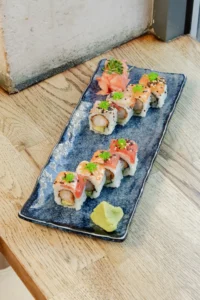
Uramaki flips the structure of traditional maki. In this case, the rice sits on the outside while the nori hugs the filling within. Sushi chefs often coat the outer rice with sesame seeds, tobiko, or thinly sliced fish. This style emerged in the United States during the 1960s and quickly won fans worldwide.
Why Uramaki Took Off
Many Western diners initially felt unsure about the look and texture of seaweed. Therefore, hiding the nori inside made sushi more approachable. The famous California Roll, made with crab, avocado, and cucumber, helped spark this trend. Today, uramaki rolls feature on menus everywhere, from London to Sydney.
Specialty Rolls: Where Creativity Takes Over
Specialty rolls break the traditional rules and lean heavily on bold flavours, sauces, and unique presentations. For instance, you might find rolls topped with seared salmon, drizzled with spicy mayo, or wrapped in soy paper instead of nori. Restaurants like Tanakatsu often craft signature rolls that reflect both Japanese roots and modern tastes.
Popular Specialty Rolls to Try
A few specialty rolls have earned wide recognition. The Dragon Roll features eel and cucumber inside, with avocado layered on top to mimic dragon scales. Likewise, the Rainbow Roll uses a variety of fish across the surface, creating a colourful, eye-catching dish. Spicy tuna rolls remain a firm favourite for those who enjoy a bit of heat.
How to Choose the Right Speciality Sushi Roll
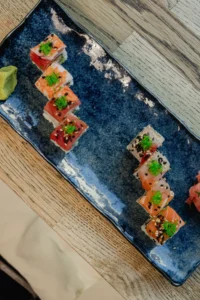 Picking the right roll depends on your taste and experience. If you prefer subtle flavours, start with hosomaki or simple maki. On the other hand, if you enjoy richer, layered tastes, try uramaki or specialty options. Additionally, vegetarians can find plenty of choices, from avocado maki to creative vegetable specialty rolls.
Tips for First-Time Sushi Diners
Begin with milder fillings, such as cucumber, avocado, or cooked prawn. Then, work your way up to raw fish rolls like tuna or salmon. Furthermore, eat each piece in one bite, since this preserves the balance the chef carefully built. Finally, use soy sauce sparingly so you do not overpower the flavours.
Final Thoughts
Sushi rolls offer something for everyone, from purists who love classic maki to adventurous eaters chasing bold specialty creations. Once you understand the basics, exploring new rolls becomes a joy rather than a guessing game. So next time you visit a sushi spot like Tanakatsu, order with confidence and enjoy the journey one bite at a time.
Frequently Asked Questions
What is the difference between maki and uramaki? Maki has the nori on the outside with rice and filling inside. Uramaki flips this, placing the rice on the outside and nori around the filling.
Are specialty rolls authentic Japanese sushi? Specialty rolls are mostly a Western creation, but they draw on Japanese techniques. Many sushi restaurants in Japan now serve them too, given their popularity.
What is the most popular sushi roll in the world? The California Roll remains one of the most popular sushi rolls globally. It introduced many diners to sushi through its mild, approachable flavours.
Can vegetarians enjoy sushi rolls? Yes, vegetarians can enjoy many sushi rolls. Common options include cucumber, avocado, pickled radish, and tofu rolls.
Where can I try authentic sushi rolls? You can try a wide range of sushi rolls at Tanakatsu, which serves both traditional and modern Japanese dishes.