
Healthy Packed Lunch: 5 Bento Basics
There is something deeply satisfying about opening a bento box containing a fresh, delicious, healthy packed lunch. Unlike a sad sandwich tossed in a zip-top bag, a bento feels like a meal – deliberate, balanced, and beautiful.
But if you’ve ever opened your lid to find a soggy mess of rice mixed with strawberry juice, you know there’s a technique to it. The Japanese art of bento isn’t just about making food look cute; it’s a system of preservation and structure.
Whether you are packing for yourself or your kids, follow these 5 Bento Rules to master the art of the leak-proof, healthy lunch.
Rule 1: Cool Your Healthy Packed Lunch
 This is the golden rule of bento safety. Never close the lid on hot food.
If you pack hot rice or warm leftovers and seal the box immediately, condensation forms on the inside of the lid. That moisture drips back onto your food, creating a breeding ground for bacteria and turning your crisp textures into mush.
- The Fix: Spread hot rice or proteins on a plate to cool rapidly before packing, or pack the night before and refrigerate the open box until cool.
Rule 2: Master the 3:2:1 Ratio
In fact, traditional bento boxes follow specific ratios to ensure nutritional balance without calorie counting. Therefore, a standard, easy-to-follow guideline for a balanced box is:
- 3 Parts Carbohydrate: Usually rice, noodles, or a wrap.
- 2 Parts Protein: Grilled chicken, hard-boiled eggs, tofu, or beans.
- 1 Part Vegetables: Steamed broccoli, cherry tomatoes, or snap peas.
Pro Tip: If you are watching your carb intake, you can flip the ratio to 3 Parts Veggies, 2 Parts Protein, and 1 Part Carb.
Rule 3: Pack Your Healthy Packed Lunch Tight
In a Western lunchbox, we often leave “breathing room” between an apple and a sandwich. In a bento, space is the enemy. If there are gaps, food will shift, tumble, and mix during your commute.
You want to pack the food so tightly that if the box were shaken, nothing would move.
- Use “Gap Fillers”: Use sturdy vegetables like broccoli florets, cherry tomatoes, or snap peas to plug the holes between larger items.
- The Shake Test: Once packed, give the box a gentle horizontal shake. If you hear sliding, add more “gap fillers.”
Rule 4: Drain the “Weeping” Foods
Liquids are the number one cause of bento failure. Many foods, especially cooked vegetables and cut fruits, release moisture (or “weep”) as they sit.
- For Fruit: Dry washed fruit thoroughly with a paper towel. Avoid cutting juicy fruits like melons until you are ready to eat, or pack them in a separate sealed container.
- For Cooked Veggies: If using boiled spinach or stir-fry, squeeze out excess liquid or place them on a bed of absorbent food (like dried bonito flakes or a layer of rice) to soak up the juices.
- Sauces: Always keep dressings and dipping sauces in a separate, screw-top mini container.
Rule 5: Separate Flavours Physically
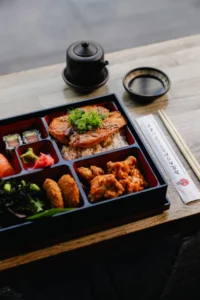 Even without leaks, flavours can migrate. You don’t want your strawberries tasting like garlicky stir-fry.
- Barriers: Use lettuce leaves, cucumber slices, or reusable silicone baking cups to create physical walls between sweet and savoury items.
- Hard vs. Soft: Place harder items (like carrots) next to softer items (like omelettes) to provide structural support and prevent squishing.
A Simple Healthy Packed Lunch Formula
Ready to try it? Here is a simple “starter bento” you can prep in 10 minutes:
- Base: 1/2 cup cooked rice (sprinkled with sesame seeds).
- Protein: 2 hard-boiled eggs (sliced) or leftover grilled chicken.
- Veggie: Steamed broccoli (dry thoroughly!).
- Gap Filler: Cherry tomatoes tucked into the corners.
Conclusion
In summary, building a bento habit doesn’t require artistic talent or hours of preparation. It is simply about mindfulness. By following these rules, you turn lunch from a grab-and-go afterthought into a moment of self-care. Start with what you have in your fridge, pack it tight, and enjoy a meal that treats you right.