
White Fish Sushi: A Beginner’s Guide
You likely know the routine well, yet you miss incredible flavours by ignoring the delicate world of white fish sushi. Diners take a seat at their favourite sushi bar. Subsequently, they open the menu and scan the list. Predictably, you order the Spicy Tuna Roll. Furthermore, you add some salmon nigiri to the plate. However, stop right there. Surprisingly, you miss a hidden world of flavour by sticking to these staples. Specifically, sushi chefs call this world “Shiromi,” or white fish. In fact, these varieties offer incredible textures and subtle tastes. Therefore, today we break your routine. Now, let’s explore the delicate and delicious world of white fish.
Why Connoisseurs Prize White Fish Sushi
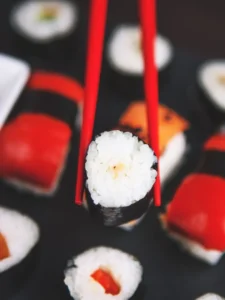 In the West, diners often chase the fatty explosion of tuna belly. However, Japanese food culture takes a different path. Chefs and gourmets prize Shiromi for its elegance. Red fish hits the palate with force. In contrast, white fish whispers. You must pay attention to appreciate it fully.
Moreover, texture plays a massive role here. Japanese diners love a specific chewiness called “mochi-mochi.” White fish often provides this delightful snap. It feels firm yet tender. Consequently, eating Shiromi becomes an engaging experience. You taste the clean ocean, not just fat.
Meeting the Stars of Shiromi
You might feel overwhelmed by the Japanese names on the menu. Let’s simplify things. We will focus on three popular varieties.
Fluke (Hirame)
First, let us look at Hirame. Chefs usually serve this classic sushi topping during the winter. It possesses a translucent, pale look. The flavour remains incredibly mild and clean. However, the texture defines this fish. It offers a firm, satisfying bite. Chefs often age Hirame to bring out hidden umami. It creates a perfect starting point for your meal.
Sea Bream (Tai)
Next, we have the King of White Fish. Japanese people celebrate Tai as a symbol of good luck. You will often see it at weddings and celebrations. It tastes slightly sweeter than Hirame. The flesh feels a bit softer but still holds its shape. Sometimes, chefs keep the skin on the fish. They blanch it quickly with hot water. This technique adds a lovely crunch and savoury depth.
Yellowtail (Hamachi)
Finally, we come to a crowd favourite. You might already know Hamachi. It bridges the gap between light white fish and rich red fish. Technically, it belongs to the white fish category. However, it carries much more fat than Tai or Hirame. It melts in your mouth like butter. The flavour packs a rich, bold punch. Therefore, beginners often find Hamachi the easiest white fish to enjoy.
Perfect Pairings for White Fish Sushi
 Now, you must learn how to eat these delicacies. Do you dunk everything in soy sauce? Please do not do that.
Soy sauce works well for fatty fish like tuna. However, it easily overpowers delicate Shiromi. You mask the subtle sweetness of the fish with too much salt.
Instead, many chefs recommend ponzu for Hirame and Tai. The citrus notes in ponzu lift the clean flavours. It acts like a squeeze of lemon. Consequently, the fish tastes brighter. You might also ask for a pinch of sea salt and a squeeze of sudachi lime.
In contrast, Hamachi stands up well to soy sauce. Its high fat content balances the salty kick. Just remember the golden rule. Dip the fish, not the rice. This prevents the sauce from ruining the perfect bite.
Broaden Your Palate
Therefore, next time you visit a sushi restaurant, simply ignore the salmon. Furthermore, look straight past the tuna. Instead, ask the chef for their very best Shiromi recommendation. Consequently, you will discover a new appreciation for texture and subtlety. Ultimately, your palate will thank you for the adventure.